


A Better Visit, a Lighter Footprint: Vermilion Cliffs National Monument Marks 26 Years
At White Pocket in the Vermilion Cliffs National Monument, millions of years of geological history have shaped ancient sand dunes into swirling formations of red, orange, and white sandstone. Photographers, hikers, and outdoor enthusiasts travel miles across rugged desert roads to experience one of the most remarkable landscapes in northern Arizona.
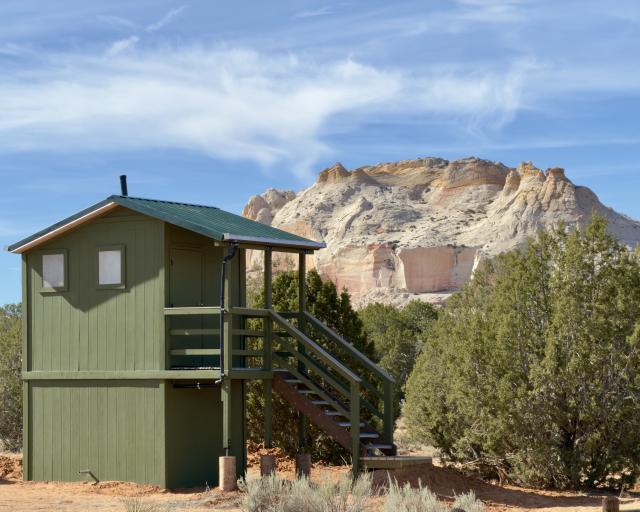
Now, visitors will find something considerably less dramatic than the surrounding scenery, but important to its future: a new composting toilet designed to improve the visitor experience while protecting the fragile desert environment.
Providing essential facilities in remote recreation areas like White Pocket helps visitors better enjoy their time outdoors while protecting the natural resources they come to experience. Through innovative solutions and partnerships, the project advances the goals of the Bureau of Land Management (BLM)'s All Americans Outside initiative and supports implementation of Section 154 of the Expanding Public Lands Outdoor Recreation Experiences (EXPLORE) Act, which calls for improving the availability, functionality and cleanliness of restroom facilities on federal recreation lands.
Vermilion Cliffs National Monument was established Nov. 9, 2000. The 280,000-acre monument protects extraordinary geological formations, cultural resources, wildlife habitat and expansive backcountry landscapes. For more than a quarter century, the BLM has worked to preserve these resources while providing opportunities for people to explore them.
Located on the monument's Paria Plateau, White Pocket has become an increasingly popular alternative to the nearby Wave formation in Coyote Buttes North. While visiting The Wave requires a highly sought-after permit, White Pocket offers similarly dramatic sandstone scenery without the same permit requirement.
Reaching White Pocket, however, requires traveling more than 15 miles over primitive, sandy and rocky roads in a high-clearance, four-wheel-drive vehicle. Despite the difficult journey, visitation has more than tripled over the past 12 years, from 6,033 visitors in fiscal year 2014 to 20,684 in fiscal year 2026. Increased recreation demand, the popularity of off-road travel and visitors seeking alternatives to The Wave have contributed to White Pocket's growing appeal. With that popularity came mounting pressure on the area's limited facilities.
BLM employees documented increasing amounts of human waste and discarded toilet paper around the trailhead, creating concerns for both human health and the surrounding environment. What should have been a memorable visit to a world-renowned geological destination was increasingly affected by the lack of adequate sanitation facilities.
The need for a permanent restroom at White Pocket was clear, but finding a practical solution for such a remote location presented significant challenges. A conventional vault toilet would require periodic servicing by a specialized pumping truck that could not safely navigate White Pocket's primitive access roads. Transporting and installing a large, prefabricated facility presented additional logistical challenges.
BLM recreation staff began looking for an alternative. The answer came partly from another BLM field office. The BLM's St. George Field Office in Utah had successfully installed two composting toilets at the Sand Mountain Off-Highway Vehicle Area, where similarly demanding environmental conditions made conventional waste management difficult.
After visiting the Utah facilities and consulting with staff, the Arizona Strip team determined that the same technology could address White Pocket's sanitation needs.
The selected single stall facility uses a two-level design. The toilet occupies the upper level, while the lower level houses the composting equipment, rainwater collection system, electrical controls and solar battery.
Waste enters the composting chamber, where aerobic bacteria begin breaking it down. Wood chips provide a bulking material, and internal components separate liquids and solids to help the decomposition process. Periodic manual mixing keeps the material moving through the system, with finished composted material removed approximately once or twice a year, depending on use.
Two solar panels supply power for ventilation, lighting, equipment operation and a spray system that helps maintain moisture for decomposition. Collected rainwater supports the process without requiring an outside water supply.
Together, these systems allow the facility to operate without external electricity, water hookups or conventional waste-pumping services.
The technology was only part of the solution. Getting it to White Pocket required an equally innovative approach. Around the same time that BLM was researching composting toilets, representatives of the Foundation for America's Public Lands visited White Pocket and expressed interest in supporting an improvement that would benefit visitors.
Together, the Foundation for America’s Public Land and BLM found the solution. The Foundation purchased and transported the facility from the manufacturer in Montana to the monument while the BLM contracted installation and provided site prep work. The project illustrates another important part of that commitment: partnerships that turn planning into practical improvements for the public.
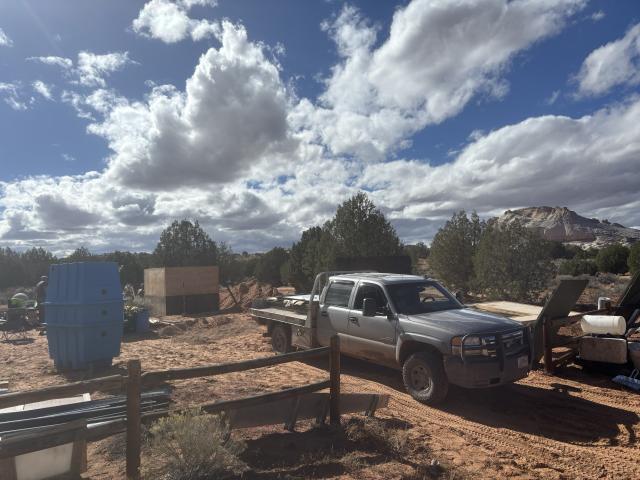
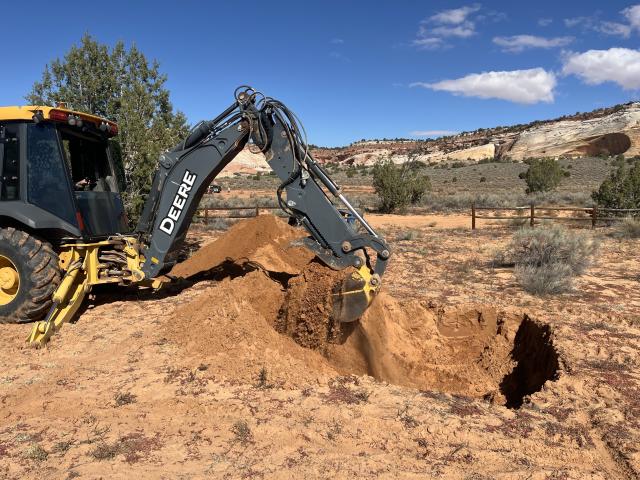
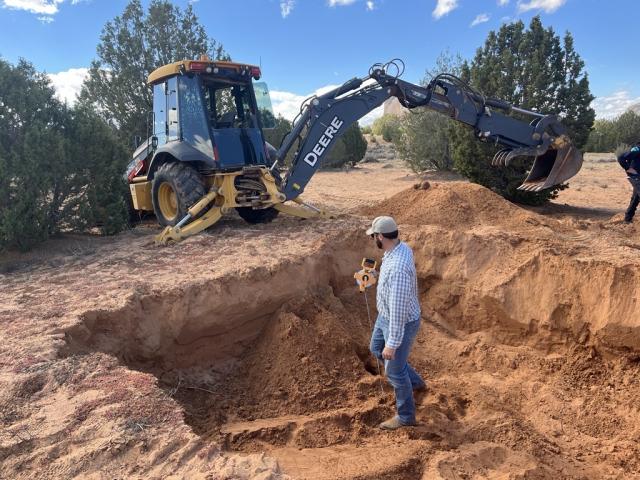
Work began Oct. 20, 2026, when BLM personnel started excavating the building footprint and transporting gravel to the site.
Just one week after construction began, the facility was ready. The restroom opened to visitors on October 27, although some signage and finishing amenities remained to be installed.
"The challenge wasn't simply installing a restroom," said Tim Pananos, BLM outdoor recreation planner. "We needed a system that could operate without traditional utilities or waste-pumping equipment, and we had to get it into a very remote location. By working with our partners, we found a practical solution that will benefit visitors while helping protect White Pocket."
A third factor to installing the restroom was to consider how the restroom would affect White Pocket's renowned scenery.
The area is managed as Visual Resource Management Class II, which emphasizes retaining the landscape's existing visual character. The elevated restroom rises slightly above the surrounding juniper trees, so the structure was painted Juniper Green to help it blend into the surrounding vegetation.
Exterior lighting was also avoided to preserve the area's naturally dark skies and remote backcountry character.
These design choices demonstrate how even small facility improvements require careful planning to protect the qualities that draw visitors to public lands.
At White Pocket, better recreation infrastructure supports opportunities to experience a remarkable landscape, while thoughtful design and responsible waste management demonstrate how visitors and land managers can help protect the places they enjoy.
"All Americans Outside is about more than encouraging people to explore their public lands. It's about making thoughtful improvements that support recreation while protecting the resources people come to experience," said Brandon Boshell, acting Arizona Strip District manager. "As we celebrate 26 years of Vermilion Cliffs National Monument, this project shows how our employees and partners are finding practical solutions to preserve these extraordinary places for future generations."
When Vermilion Cliffs National Monument was established, visitation was a fraction of what it is today. Now welcoming more than 200,000 visitors annually, the monument faces new challenges in preserving its natural resources while providing opportunities for outdoor recreation.
The White Pocket project demonstrates how BLM employees and partners are meeting those challenges through practical solutions and innovative technology. As the monument marks 26 years, these efforts help ensure future generations can continue to discover its extraordinary geology, experience solitude and explore the rugged beauty of the Arizona backcountry.
Related Content
Related Stories
- Exploring the Wildlife of the Jupiter Inlet Lighthouse Outstanding Natural Area
- New Beginnings and Happy Trails at Deerwood Ranch
- Explore, Learn, and Connect Through Outdoor Traditions at Berryessa Snow Mountain
- Calcasieu Pass Land Sale Completed, Supporting Responsible Land Management and Energy Infrastructure
- A Legacy on the Landscape: One Woman's Vision Lives on at Mount Tipton near Kingman
Office
4001 East Aviator Drive
St. George, UT 84790
United States